
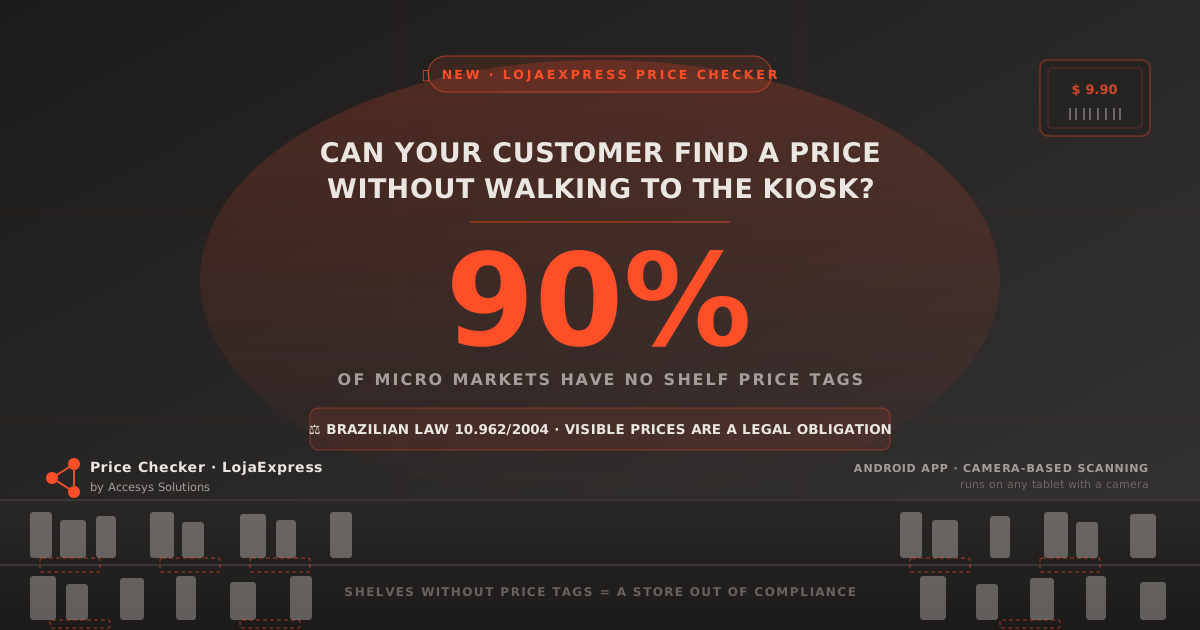
Try this test in your autonomous store: pick any product off the shelf and find out its price without walking to the payment kiosk. Can’t do it? Then your store has an operational problem, a lost sale every day — and a compliance gap.
In the micro market segment, roughly 90% of retailers don’t print shelf price tags. It’s not negligence: physical labels are expensive and keep the operation manual. A price changes in the back office in seconds, but the printed tag stays on the shelf, outdated — and swapping paper labels every week goes against everything an autonomous store stands for.
The consequence shows up on the other side: the customer who wants to know a price has to grab the product, cross the store, and scan it at the same kiosk where other people are paying.
The domino effect of invisible prices
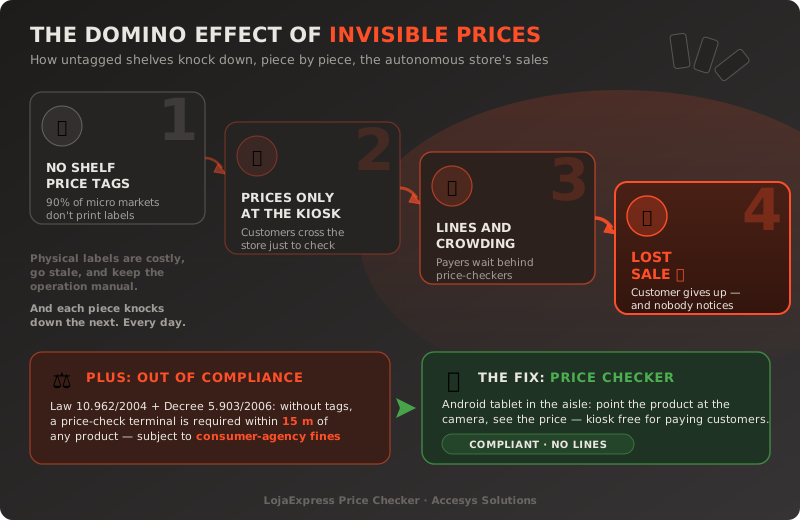
Every operator knows the scene: a line at the kiosk, and half the people in it aren’t paying — they just want a price. That creates three losses at once:
- Crowding at the store’s most expensive equipment, tied up with its simplest task;
- Paying customers wait — and a bad experience is a customer who doesn’t come back;
- Price-checkers give up — on the product, and sometimes on the entire purchase. With no staff on the floor, nobody sees the sale slip away.
And there’s a fourth loss most store owners don’t know about: operating this way violates Brazilian consumer protection law.
What the law says: visible prices are mandatory
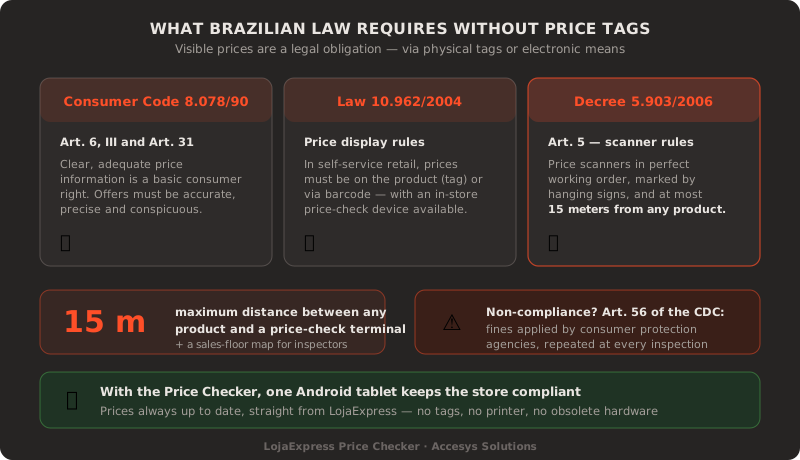
Three rules form the legal tripod of price display in Brazil:
- Consumer Protection Code (Law 8.078/1990, art. 6, III and art. 31): clear and adequate price information is a basic consumer right. Offers must be accurate, precise, and conspicuous.
- Law 10.962/2004: regulates how prices must be displayed in self-service retail — a tag on the product or a barcode, provided the store offers a way to check prices.
- Decree 5.903/2006 (art. 5): stores that rely on barcodes — which is virtually every autonomous store — must provide price-check scanners in perfect working order on the sales floor, marked by hanging signs, with a maximum distance of 15 meters between any product and the nearest scanner.
In other words: if your store has no shelf price tags and the only place a customer can check a price is the payment kiosk, it likely fails both the 15-meter rule and the purpose of the law — and is exposed to the sanctions of art. 56 of the Consumer Code, with fines applied by consumer protection agencies at every inspection.
The good news: the same law that requires visible prices accepts digital means. That’s where an autonomous store can turn an obligation into an advantage.
The solution: LojaExpress Price Checker
The Price Checker (“Busca Preço”) is the newest module of the LojaExpress platform, built by Accesys Solutions: an Android app that turns any tablet with a camera into a price-check terminal in the store aisle.
The customer holds the barcode up to the camera and instantly sees the product’s price, photo, and active promotions — without walking to the kiosk or waiting for someone to finish paying. Can’t find the barcode? Browse by category or search by name.
What makes the difference in practice:
- Prices always up to date, in real time — the app uses the same product catalog, prices, and promotions the store already maintains in LojaExpress. Change it in the back office, and it changes on the terminal. It’s the definitive answer to the outdated-label problem.
- Zero-friction rollout — install the app, enter the store token, done. No external scanner, no printer, no payment device.
- Affordable, modern hardware — runs on any Android tablet with a camera. None of those obsolete price verifiers with tiny screens you see in traditional supermarkets: the experience is a current app, with product photos, animated promotion highlights, and was/now pricing.
- Legally compliant — with check terminals spread across the aisles (we recommend one per 2–3 aisles), the store meets Law 10.962/2004 and Decree 5.903/2006.
The tablet that checks prices also sells
When nobody is scanning, the Price Checker screen doesn’t sit idle: it plays the store’s banners — the same ones already configured in LojaExpress for the kiosk.
That turns every terminal into a media point inside the aisle: weekly highlights, promotions, new arrivals. And it opens a concrete path to monetization with partners and suppliers, who can advertise at the exact moment the customer is standing in front of the shelf, deciding what to buy.
Promotions appear with animated highlights and was/now pricing, encouraging impulse purchases. Loyalty pricing shows up as an invitation — “sign up and pay $X” — driving new registrations into the store’s loyalty program.
Convenience for the customer, compliance for the store
The bottom line:
- For the end customer: intuitive price checks on a tablet camera, steps away from the shelf — no lines, no friction;
- For the store: a payment kiosk free for people who are actually paying, fewer abandoned purchases, consumer-law compliance, and a new media channel;
- For the operation: no labels to print, no outdated prices, no extra equipment to maintain.
The Price Checker is available today as an add-on module for the 1,000+ stores running on the LojaExpress platform — and ships as part of the standard kit for new deployments.
Want your store compliant, more tech-forward, and with new revenue possibilities? Talk to our sales team and learn how to bring the Price Checker to your operation.